

11 Jan January’s Action: Commit to One Climate-Smart Action
A New Year, One Meaningful Commitment
The New Year often arrives with ambitious lists of resolutions—well-intentioned, but difficult to sustain. We aim to change many things at once, only to discover that momentum fades quickly when expectations become unrealistic.
At FreeportCAN, we take a different view. Meaningful change rarely comes from doing everything. It comes from choosing one thing and doing it consistently.
FreeportCAN focuses on practical climate action rooted in everyday life here in Freeport. Our goal is not perfection or ideology, but progress—changes that improve comfort in our homes, strengthen neighborhood resilience, and reduce environmental impact in measurable ways.
This January, we invite you to commit to one climate-smart action that fits your circumstances and priorities. Not a major overhaul. Not an idealized version of sustainability. Simply one practice you can maintain long enough for it to become routine.
When many individuals make steady, visible improvements, collective impact follows. What begins as a personal decision can quietly influence how a community evolves.
When Your Actions Become Invitations
Climate action develops through observation as much as intention. When neighbors see practical choices working in real settings, those choices become easier to imagine for themselves.
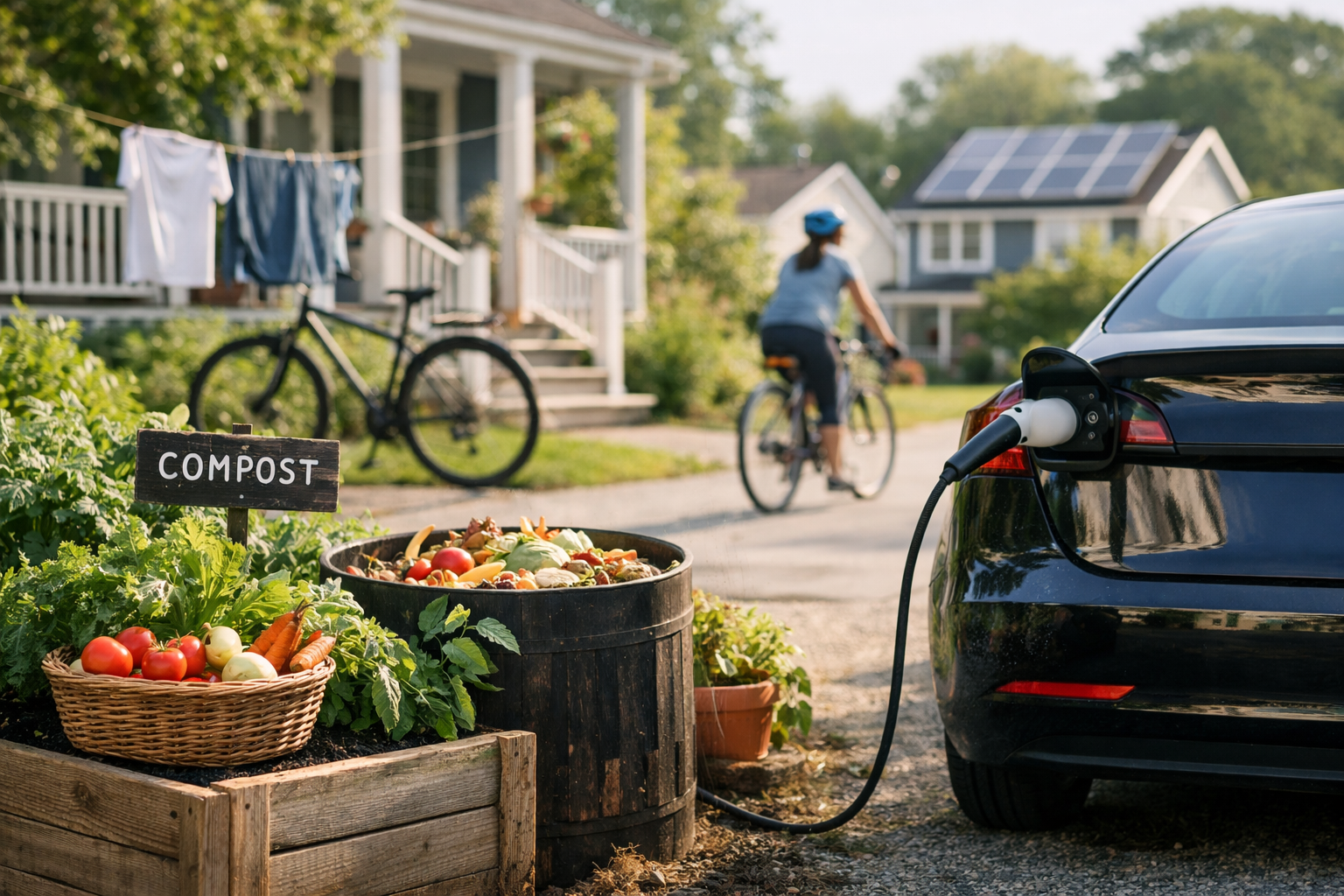
A bicycle leaned against a porch railing, compost bins set out on collection day, herbs growing near a sidewalk, laundry drying outdoors, or an electric vehicle charging in a driveway—these are ordinary signals that reinforce what is possible without advocacy or explanation.
One of the most effective ways to encourage broader adoption of sustainable practices is simply to allow them to be visible.
Resolutions Others Can See
If you are considering where to begin, the following visible actions continue to resonate locally:
- Walk or bike short trips.
Short errands completed on foot or bicycle demonstrate practicality and accessibility.
Visibility matters: allow time for informal interactions and normal routines to be seen. - Compost where conversations can start.
Food waste diversion remains one of the simplest ways to reduce household impact.
Visibility matters: display compost service signage or locate finished compost where it can be noticed and discussed. - Hang laundry outside.
Line-drying reduces energy use while extending clothing life.
Visibility matters: permanent lines signal that outdoor drying is normal and acceptable. - Grow food in your front yard.
Small gardens communicate food resilience and shared abundance.
Visibility matters: planting near sidewalks encourages curiosity and exchange. - Drive electric and share experience.
Familiarity significantly increases comfort with new transportation technologies.
Visibility matters: charging at home and offering occasional rides lowers perceived barriers.
Behavioral Change Is the Climate Lever We Control
Climate action is often framed as a technology challenge: better batteries, cleaner grids, smarter buildings. Those advances matter. But one of the fastest levers available today is human behavior — the everyday choices that shape energy use, material consumption, and community norms. Small, visible actions compound over time, accelerating adoption.
Research indicates that behavior shifts can deliver meaningful emissions reductions when supported by broader systems and policies. For readers interested in the evidence, the World Resources Institute provides a useful overview.
Why Positive Resolutions Endure
People tend to stick with goals that add something positive to their lives rather than goals focused on restriction or avoidance. New habits take time to settle in, and progress comes from returning to the practice when life interrupts — not from perfect consistency.
A Year of Practical Climate Action in Freeport
Over the past several years, FreeportCAN has shared actionable guidance addressing many dimensions of household and community sustainability, including:
- Winterizing homes
- Reducing food waste
- Going plastic-free
- Eating climate-friendly foods
- Reduce, reuse, repair
These topics reflect a consistent theme: progress emerges through practical, repeatable decisions rather than single large interventions. Explore all EcoHomes actions here: EcoHomes.
An Invitation for 2026
Choose one sustainability practice that aligns with your priorities and daily patterns. Commit to it long enough for it to become established. Allow it to be visible when appropriate.
Individual actions accumulate into community norms. Over time, those norms influence infrastructure, markets, and expectations.
One person. One action. Repeated across a community, meaningful change follows.