

02 Feb February’s Action: Save Your Heating Bill
Brrr… what a winter it has been so far! With the frigid temperatures that have set in recently, you may be wishing you’d done more to insulate against the cold — and also against rising utility costs. Fear not — it’s never too late to make your home more energy efficient, even if the groundhog promises spring is around the corner!
Optimize Those Heat Pumps
With the big push in Maine toward heat pumps over the last few years, many now have these “high efficiency” temperature regulators installed, but not everyone is using them to maximize their potential. Here are some “hot tips” from Efficiency Maine to help you keep warm with your heat pumps even on the coldest days, without breaking the bank:
Use your heat pumps all winter.
High-performance heat pumps are the most efficient heating system, even on the coldest winter day. If you have both heat pumps and a boiler or furnace, your heat pumps are the more energy-efficient choice.
Set it and forget it.
Heat pumps operate most efficiently when holding a steady temperature. Turning heat pumps down when you’re away or asleep may actually use more energy than leaving them on. The reason is that they have to work harder to come back to the desired temperature than they do to maintain it. It’s best to set them at a comfortable temperature and forget it. Adjusting the temperature for short periods of time, such as overnight, will not save money with heat pumps.
Set temperature for comfort.
Many heat pump indoor units are mounted high on the wall. Because heat rises and heat pumps measure temperature at the indoor units, you may find you need to set your heat pump at a higher temperature than with a traditional wall thermostat setting to feel comfortable. This may be different for ducted heat pumps, floor units, or heat pumps with wall-mounted thermostats.
Avoid “Auto” mode.
In “Auto” mode, heat pumps maintain a constant temperature by alternating between the “Cool” and “Heat” modes. To avoid accidentally air conditioning on a mid-winter sunny day or perhaps when a wood stove is running, use “Heat” mode, not “Auto.” Likewise, to avoid accidentally heating on a cool summer night, use “Cool,” “Dry,” or “Fan” mode, not “Auto.”
Optimize fan speed.
Start with the fan speed set to “auto.” If that doesn’t spread the heated or cooled air far enough, select the fixed speed that works best for you.
Optimize air flow direction.
It’s easy to re-direct airflow on a heat pump. To maximize reach, air should be directed toward the open space that is the farthest away from the indoor unit, and away from any obstructions. Air deflectors can be used for ducted heat pumps. You may need to experiment to see what’s most comfortable for you.
Clean your dust filters.
Heat pumps work best when dust filters are clean. Depending on filter type, you should vacuum, rinse or replace the dust filters whenever they become visibly dirty or when the indicator light comes on. The frequency of cleaning can range from weeks to months depending on use and dust volume. For details on how to take the filters out, consult your user manual.
Check out Efficiency Maine for more tips, plus some video tutorials.
No Heat Pump? No Problem.
There are plenty of other options for using less energy and keeping boiler usage at a minimum, even if you don’t have a heat pump. And it is important to note that Maine is still offering incentives for heat pumps and other home efficiency upgrades, despite Federal drawbacks.
Seal Those Drafts
Drafty windows and doors are some of the biggest energy thieves in your home. Even small gaps can let the cold air in and allow heat to escape. You can quickly fix this with inexpensive tools like weather stripping or caulking. Check for gaps around your doors, windows, and any other areas that feel drafty, and seal them up to keep the warmth inside. Don’t forget the attic, where sealing techniques can prevent significant heating loss.
Use Door Draft Stoppers
Draft stoppers (sometimes called draft snakes) are simple and affordable tools that can block drafts under doors. You can easily make one yourself or purchase one from your local hardware store. It’s an easy way to stop the cold from sneaking in!
Insulate, Insulate, Insulate
Proper insulation is key to keeping your home warm in the winter and cool in the summer. Make sure your attic, walls, and floors are well-insulated. Insulate hot water pipes that are accessible with foam insulating tubes. If you’re not sure whether your home is adequately insulated, consider having an energy audit done or check out websites like Efficiency Maine and Energy.gov, which have easy-to-understand guides on insulation.
Let the sun shine in
Use curtains and shades to let the sun in and keep the shades drawn at night to prevent heat loss.
If your windows are old or single-pane, they can be letting out the heat. If replacing windows isn’t in your budget, adding storm windows or using heavy, insulated curtains can add an extra layer of protection. Consider installing custom made window inserts which are a local, inexpensive alternative to storm windows.
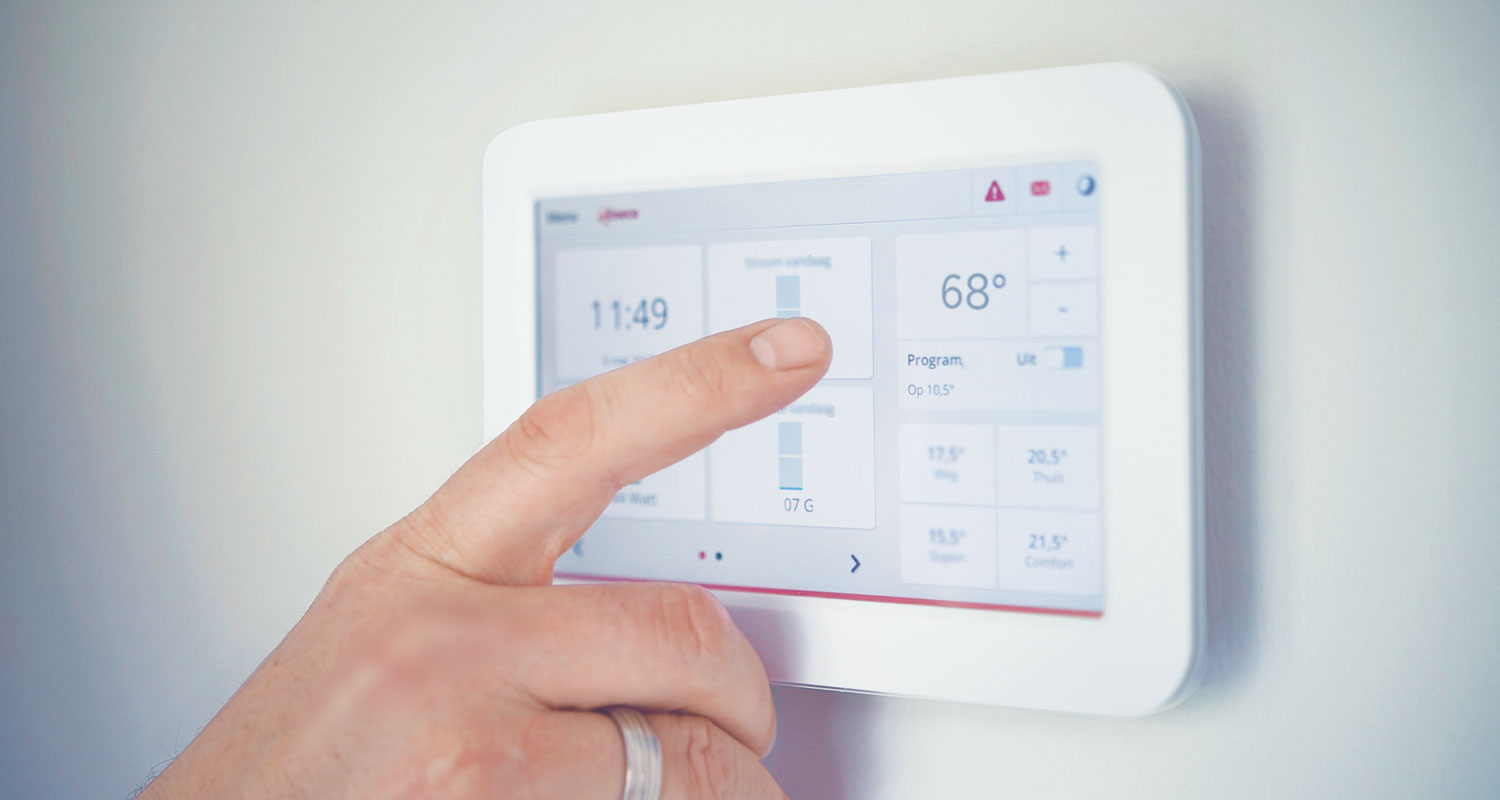
Install a Programmable Thermostat
A programmable thermostat is a simple and effective way to save on energy costs. You can set it to lower the temperature when you’re not home or at night while you sleep. By adjusting your heating schedule, you can stay comfortable and still save money. Look into options like the Nest or Ecobee thermostats, which are both user-friendly and help with energy savings.
Wrap the Hot Water Heater
On-demand water heaters are often the most efficient choice, since water is only heated when it’s in use. For electric hot water tanks, try wrapping them in an insulating blanket to reduce heat loss. Be sure to check the temperature of your water heater. Often the temperature is set at 140 degrees when in most cases a 120-degree setting is adequate.
Service Your Heating System
Your heating system works hard to keep you warm, so it’s important to make sure it’s running efficiently. Schedule a tune-up to clean and inspect your furnace or heat pump. Clean filters and well-maintained systems can lower your energy bills and prevent costly breakdowns.
By taking a few simple steps, you can create a more energy-efficient home that saves you money, reduces your carbon footprint, creates a more comfortable and sustainable living space and keeps you warm for the rest of the winter and into Mud Season!